

Sustainability is everywhere — and that’s a good thing. According to YouGov (2025), 84% of Britons believe the climate is changing, and most of us want to make better choices.
But in the design world, the word can start to lose meaning. It’s often used as a label rather than a principle, and that can make it feel vague or even overwhelming.
That’s why, at reWorks, I take a practical approach. I focus on what sustainability really looks like in the spaces we live in — guided by a simple framework that helps clients make thoughtful, low-impact decisions.
I call it: Retain. Reuse. Reclaim. New.

Before we look at new materials or suppliers, I always start by asking: what’s already working?
Retaining elements of a home — whether it’s original flooring, well-made cabinetry, or an architectural feature — is the most sustainable choice of all. Every piece that stays in place avoids the energy, waste, and cost of replacing it.
In many projects, the simplest updates — like reconfiguring furniture, repainting walls, or refreshing lighting — can completely transform a space without unnecessary consumption.
Next comes reuse: the method of giving existing items a new life.
That might mean reupholstering a favourite chair, refinishing a wooden dining table, or reconfiguring built-in storage rather than ripping it out.
These interventions keep the material value of what’s already there, while adapting it to new needs or aesthetics. It’s where design and sustainability truly meet — creative, cost-effective, and personal.

Reclaimed materials are the perfect bridge between new and existing.
They bring texture, history, and personality into a project.
At reWorks, I often use reclaimed timber for flooring, shelving, or worktops. Each piece carries subtle variations that make spaces feel authentic and human.
Beyond timber, reclaimed bricks, metal fittings, and even architectural salvage can all add depth and integrity to a design whilst contributing to our sustainability goals.

Only when retaining, reusing, and reclaiming have been explored do we look at new. We don’t live in a perfect world where we can find everything we need through other means, and so
new materials or products have their place — especially when chosen carefully.
Opting for sustainably certified, low-impact options (like FSC timber, natural paints, or recycled composites) ensures that when something is new, it still aligns with the home’s values and longevity.
This approach — Retain, Reuse, Reclaim, New — keeps sustainable design tangible and achievable. It shifts the focus away from “buying green” and towards using what we already have better.
For clients, it creates homes that feel more authentic, personal, and connected to place.
For designers, it’s a practical tool to balance aesthetics, budgets, and environmental impact.
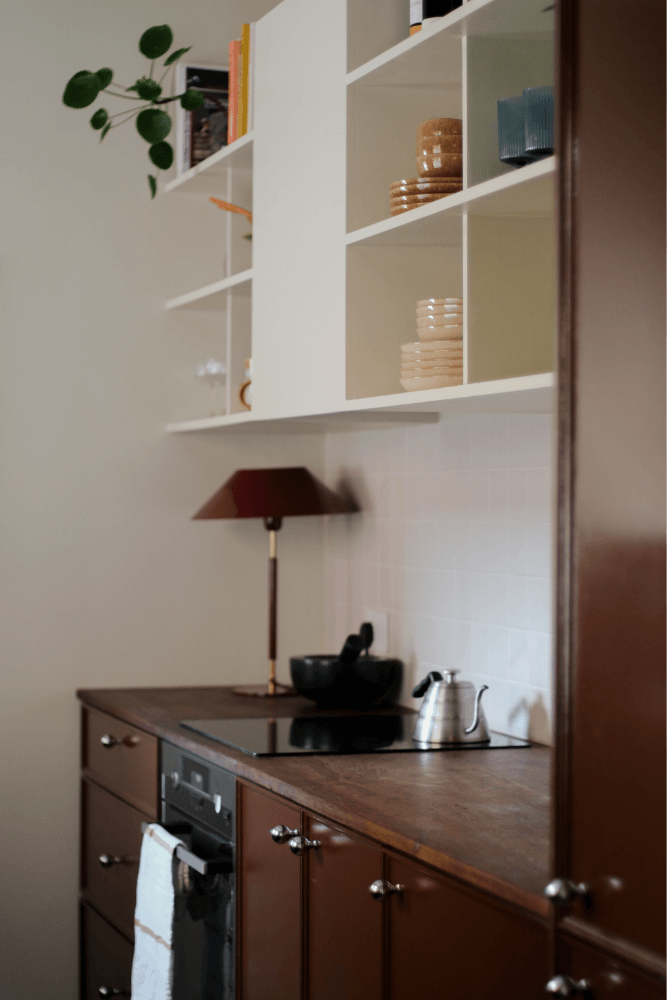
Reclaimed iroko timber adds warmth and character while reducing waste and embodied carbon.
Whether you’re planning a full renovation or just rethinking a single room, start with what you already own. Sustainability doesn’t need to be complicated — it’s simply about thoughtful choices, made in the right order.
If you’d like to explore how this framework could work in your home, you can book a design consultation here. (link to contact us page).